How Long Before You Can Use Breast Pump Again
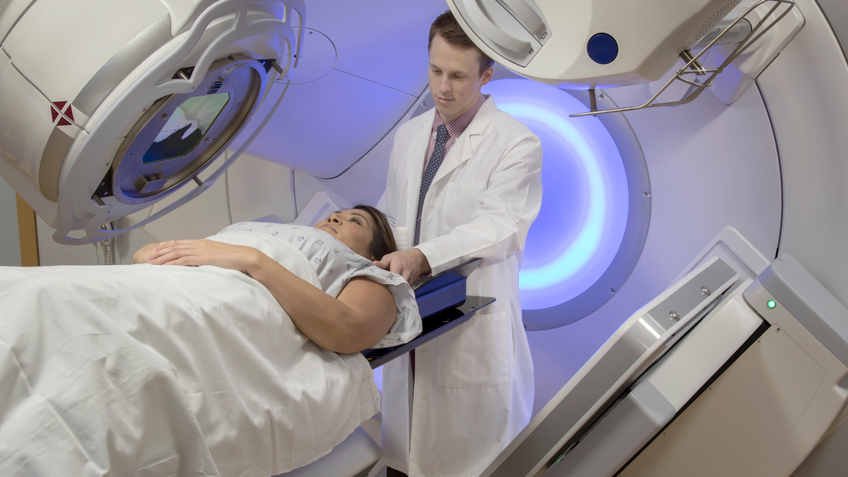
Breast cancer is the second virtually common cancer constitute in women — later peel cancer — but that doesn't mean men aren't at risk likewise. Although the percentage of cases in men is much lower than in women, male breast cancer accounts for a portion of new cases every year. The disease has no barriers when it comes to gender, ethnicity or race, and anyone could potentially develop information technology, particularly if they have certain risk factors, such every bit prior oral contraceptive or hormone use, genetic factors and family unit history.
Fortunately, scientists and researchers have made nifty strides in the treatment of breast cancer. Being vigilant and watching for the early signs of chest cancer is one of the well-nigh constructive steps in successful treatment. Detecting breast cancer in the early stages before it progresses very far often leads to positive outcomes.
Breast Cancer Statistics and Facts
Approximately one out of every eight women in the The states will develop invasive breast cancer. This equates to an average risk of around 13%. Women who take a female parent, sister or daughter with chest cancer are nearly twice every bit likely to develop information technology every bit other women. The run a risk increases to about three times as likely if they have more than ane relative in this close family unit group with chest cancer. However, nigh women who develop breast cancer don't have whatsoever family unit history at all. Just well-nigh 15% of women have other family unit members who were previously diagnosed with the disease.
For men, the risk of developing chest cancer is much lower than women, nearly 100 times lower for white men, in fact. Black men, on the other mitt, are only about 70 times less likely to develop it than black women. On boilerplate, roughly one out of every 833 men will develop breast cancer.
Early on Breast Cancer Symptoms
Breast cancer is obviously common enough, peculiarly in women, to cause concern, but early detection can tip the scales in favor of a positive outcome. For starters, it's important to pay attention to breast appearance, because one of the earliest signs of breast cancer is a change in breast size or shape due to swelling or other factors. Some women may notice pain or a crimson, irritated rash in a sure area that doesn't go away, and lumps may be felt or even be visible in the breast or the underarm expanse. Veins that become more than prominent, dimpling in the breast tissue and nipple belch are as well signs that should be investigated.
Women could have all the symptoms of breast cancer or just a few, so it'southward important to exist diligent about all the potential signs. On the other hand, symptoms don't always mean you have breast cancer. Many of the symptoms could likewise be signs of other less serious conditions. The goal is to be proactive and piece of work with your medico to evaluate possible signs of breast cancer — but without panicking.
Breast Cancer Symptoms in Men
For men, chest cancer is far less mutual, and information technology may be easier to overlook symptoms. Men demand to remain vigilant to ensure they don't miss the early signs of men's breast cancer. Potential symptoms include skin dimpling, nipple retraction or discharge, a lump or swelling that might be painful, and red or scaly peel around or on the nipple. If the cancer has spread to the lymph nodes under the arm, this could cause swelling in the armpit.
Stages of Breast Cancer
If you are diagnosed with chest cancer, doctors and pathologists will examine biopsy and imaging results to determine the phase — besides known as the progression — of the disease. The process is complicated but necessary to determine the best treatment plan for your particular type of cancer. The almost mutual staging system is the TNM (Tumor, Node, Metastasis), which focuses on tumor size, lymph node involvement and metastatic spread of the cancer. It also factors in details related to hormone receptors, the poly peptide HER2 and growth rate of the cells.
In the simplest terms — the full staging system has numerous substages — Stage 0 involves potentially abnormal cells, just a tumor hasn't been located. At Stage I, a detected tumor is smaller than 2 centimeters and may have spread cancer cells to the lymph nodes. Stage Two could have a tumor size up to v centimeters, and cancer has begun to spread to the lymph nodes. Phase Three is the first stage considered to be advanced breast cancer, with the cancer perhaps spreading to other parts of the breast and the lymph nodes. The primary tumor is more than 5 centimeters at this point.
In Stage 4, the cancer has spread to other organs and parts of the body beyond the chest. This stage is often referred to equally metastatic breast cancer and is more hard to care for due to the impact on other organs. Stage Iv cancer symptoms include visible swelling in the chest and armpit; dry, flaky pare; red, dimpled skin; nipple belch; chest pain; fatigue; insomnia; loss of appetite; weight loss; shortness of breath and other symptoms related to the specific organs involved.
Breast Cancer Prognosis
Breast cancer survival rates depend on many factors, including the type and stage of the cancer, but early on detection is 1 of the most of import factors. Advances in testing and handling have led to some huge strides forward in survival rate, but individual results are still impossible to predict.
When computing the statistics, the American Cancer Society uses something chosen relative survival rate, which basically ways they compare the five-year survival charge per unit for women with the aforementioned type and stage of breast cancer to the five-year survival charge per unit for women without cancer. Women diagnosed with breast cancer that has not spread outside the chest accept a five-year relative survival rate of about 99%. Once the cancer spreads to other parts of the chest or the lymph nodes, the 5-year relative survival rate drops to 86%, which is withal a very positive prognosis. If the cancer has spread to other parts of the body, treatment becomes more than difficult, and the five-yr relative survival charge per unit drops to 27%.
Resource Links:
https://world wide web.cancer.org/cancer/chest-cancer/almost/how-common-is-breast-cancer.html
https://world wide web.cancer.org/cancer/chest-cancer/nigh/what-is-breast-cancer.html
https://www.cancer.org/cancer/breast-cancer/risk-and-prevention/breast-cancer-risk-factors-you-cannot-change.html
https://world wide web.cancer.org/cancer/breast-cancer-in-men/about/primal-statistics.html
https://www.cancer.org/cancer/breast-cancer/near/breast-cancer-signs-and-symptoms.html
https://www.cancer.org/cancer/breast-cancer-in-men/detection-diagnosis-staging/signs-symptoms.html
https://www.cancer.org/cancer/breast-cancer/understanding-a-chest-cancer-diagnosis/stages-of-breast-cancer.html
https://www.cancer.org/cancer/breast-cancer/understanding-a-chest-cancer-diagnosis/breast-cancer-survival-rates.html
Source: https://www.symptomfind.com/healthy-living/early-signs-breast-cancer?utm_content=params%3Ao%3D740013%26ad%3DdirN%26qo%3DserpIndex
0 Response to "How Long Before You Can Use Breast Pump Again"
Postar um comentário